Cool, thanks for sharing your method. What is your opinion on silver soldering the plunger tube on?
As always, Ned, I learn a great deal from your posts. Thanks for sharing that.
Ned, what about the plungers themselves? most of them are made soft and deform after some use.
What a cool thread, thanks for sharing.
Silver soldering it on is great… very technique dependent though, I mean, getting a good silver joint takes the proper prep and nothing else will do. I’ve also TIG’d the studs inside the magwell. If I were going to do that I would rummage through whichever plunger tubes were available (used would be OK) and get the one with the heaviest wall and the not-oversizest detent holes. They vary greatly in both areas.
Plungers, I’ve done a whole study on and I prefer Colt parts or Wilson Combat. The W/C’s can be counted upon to be .108 diameter, many others go even below .105… another variable in getting and keeping perfect detent efforts. I find both of them hard enough. I put a lot of time into the detent efforts sometimes-- other times it just happens. I want a stiff, crisp detent action with no bounce-back coming off safe. It can be a bit of work… and of course the stiffer the detent, the more stress is transmitted to the plunger tube and, if you are using the right side of an ambi, the more stress is put on the slot-and-blade joint. W/C’s latest ambi where the whole shaft is split is interesting ad, I presume, stronger.
Ned,
How does a stronger plunger tube benefit a LH shooter? I recall reading this some time ago, from you I’m thinking, and rather than speculate, thought I’d just ask.
Thanks
I think I’m not understanding the question. 'Cause the benefits of not coming loose and being extremely damage and wear resistant are the same no matter what-handed you are  .
.
If you meant do stiffer detent efforts, I mean making it harder to move the safety up and down, have a different benefit for LH shooters, I would say possibly more since if you are carrying on your left side, you have the left hand safety lever there to bump things and go to the “off” position. Right handers not having an ambi safety don’t have that to contend with. Downside is the above mentioned issue of stiffer (stronger) detents putting more stress on the blade and slot joint that connects the two halves of the ambi safety. This can be mitigated by having positive stops on the right-side portion if the ambi. It’s nice when you can get them to stop “down” by having the right side lever contact the top of the right side grip. The “up” stop ought to be the right side lever contacting the underside of the slide but unfortunately I have seen very few in the last 15 years that do this-.I believe it was the original design intent by Mr. Swenson that has long since been lost in the many ambis now available.
I can only assume that better detent effort and maintaining it was the intrinsic benefit for the LH shooter. Makes sense.
I did a thread on this one on LTW too, which incudes some links to other high-mileage threads. Is that within the rules (checking, now that I’ve done it…)
http://forum.ltwguns.com/viewtopic.php?f=6&t=9204
I too have a high round count 1911. The pic of the breech face reminded me of a similar pic I took a few years back.
Mine is a very early Kimber that I tuned up.
Breech face, magwell, etc:


When they are built right, they run and run, and run…
I truly enjoy looking at “hard use” guns like the Springfield that is the subject of this thread. They just scream “tool used by a serious practitioner”.
Cheers!
Lost River - very nice pistol. I’m the same way, I really appreciate photos of a “well-enjoyed” 1911.
i LOVE those pics, i hope one day a couple of my 1911’s will look like that. Ned love your stuff, you really need to post more pics… but then again that would keep you from building guns… damned if you do damned if you don’t  keep it up
Thanks for the update Ned, it is appreciated.
The MC Operator is on my short list of must have’s. Just need find one since the seem to be pretty rare in my parts.
I may have missed it, but was this replacement due to failure or as an improvement? I am just trying to keep track of when failure driven replacements are being needed.
Of the plunger tube? Failure of the old one, a peg broke off.
UPDATE: 88,000 rounds. Had a visit from Rob today. Probably would have been more but he’s in a new situation and the shooting has had to be curtailed somewhat.
We were looking at another project and I asked if he brought the Operator… he did. I proceeded to take it apart just to see if there was anything picture-worth. Boy, was there. Glad I had a chance to look into it in detail-- this might have been discovered the hard way.
More later, but this is not the fault of the barrel.
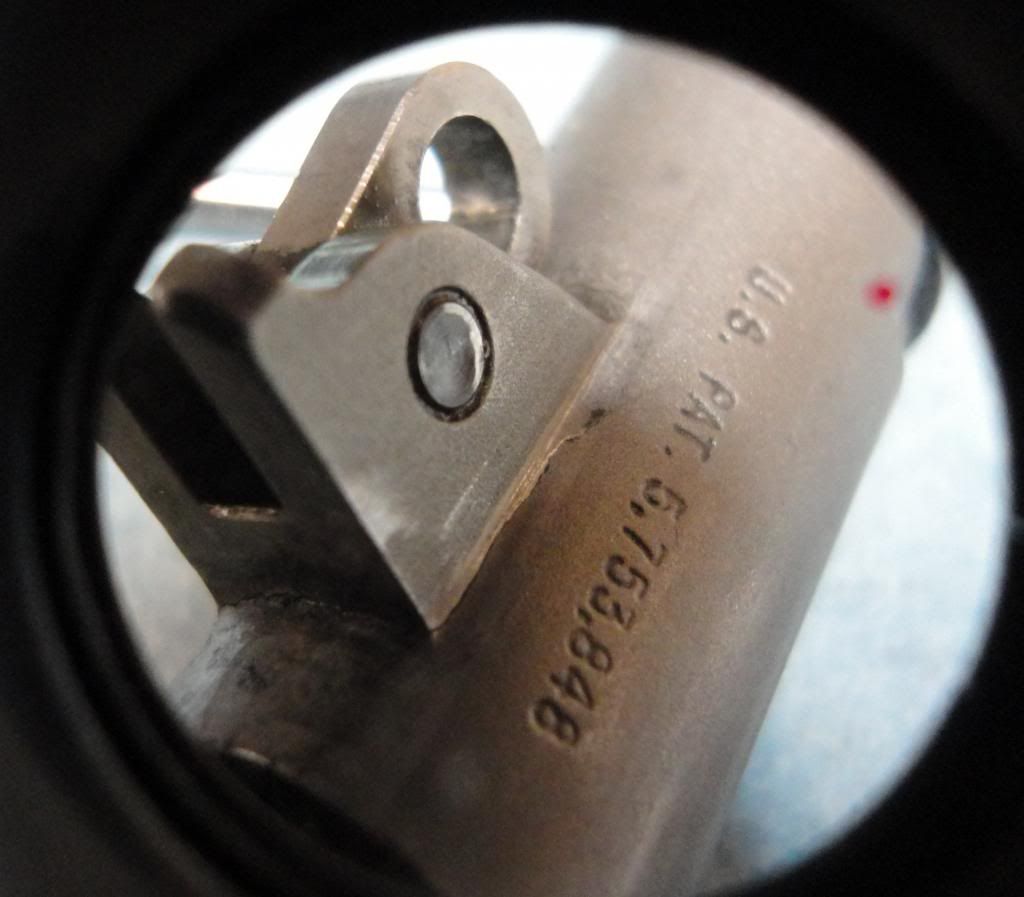
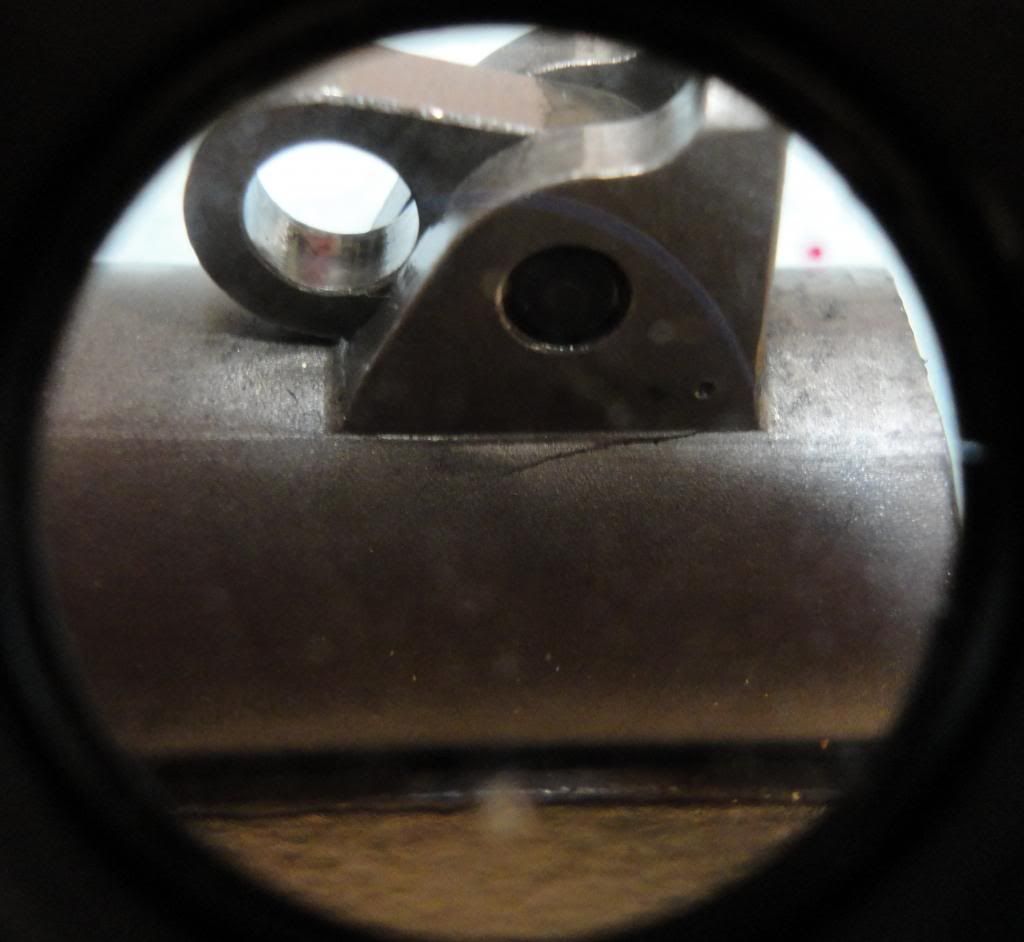
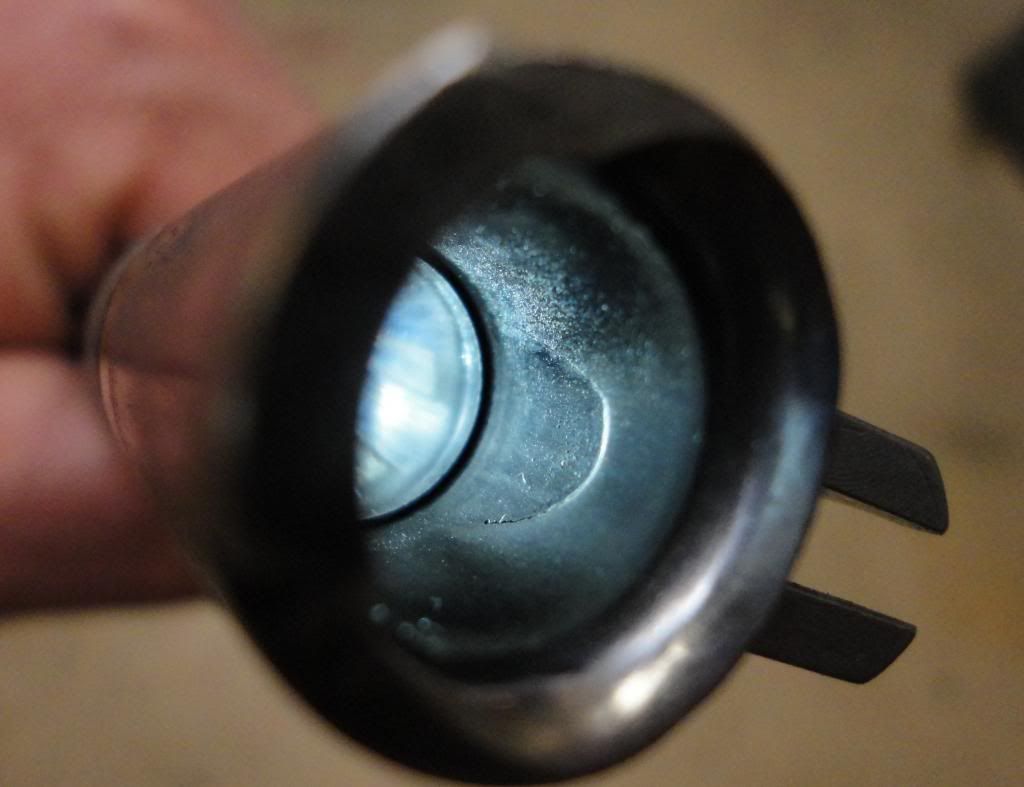
…so, the barrel I will be fitting this weekend will be number four for this gun-- which I’m sure didn’t have to be. I’m sure the first barrel which Rob had somebody else change out at 10K was fine. Operators come with an upgraded barrel compared to some Springfields, and they are as good as any from what I’ve seen. So when I started this thread at 50K we should really have been going on barrel number two and not three, or as likely, not rebarreling at all. And this barrels’ failure is doe to something else-- which I’ll get into-- but other than that, at 38000 rounds it looks pretty good inside. I’m gonna replace it with one just like it-- a Kart…-EDIT-- that should be 68,000, not 38,000. This broken Kart has 68000 rounds through t, probably 99% lead wadcutters.
The suspense is killing me, I really want to know what would cause cracks there specifically.
Same here!!
Me three!
Let’s define the part hanging down under the barrel, that has the link in it, as the barrel foot. That’s generally what it’s called.
The rear, vertical surface of it impacts the frame every time the pistol is fired… every pistol design has some version of this-- something to stop the rearward movement of the barrel.
As the barrel links down it hits the vertical impact surface in the frame. If I doesn’t hit it, it is the barrel link that stops the barrel and it (the link) will soon break. If this vertical impact takes place “too soon”, there is probably going to be some interference in the cycle and the pistol ain’t gonna work right.
But neither one is what happened here. That vertical impact surface in the frame, it is preferred to have it relieved toward the bottom so that the barrel foot impact occurs close to where the barrel foot “grows” out of the barrel body. As an alternative, sometimes you’ll see the barrel foot itself with a step in it, preventing any contact toward the bottom. A great may 1911’s don’t have this relief and as you can see, it’s hard on the barrel.
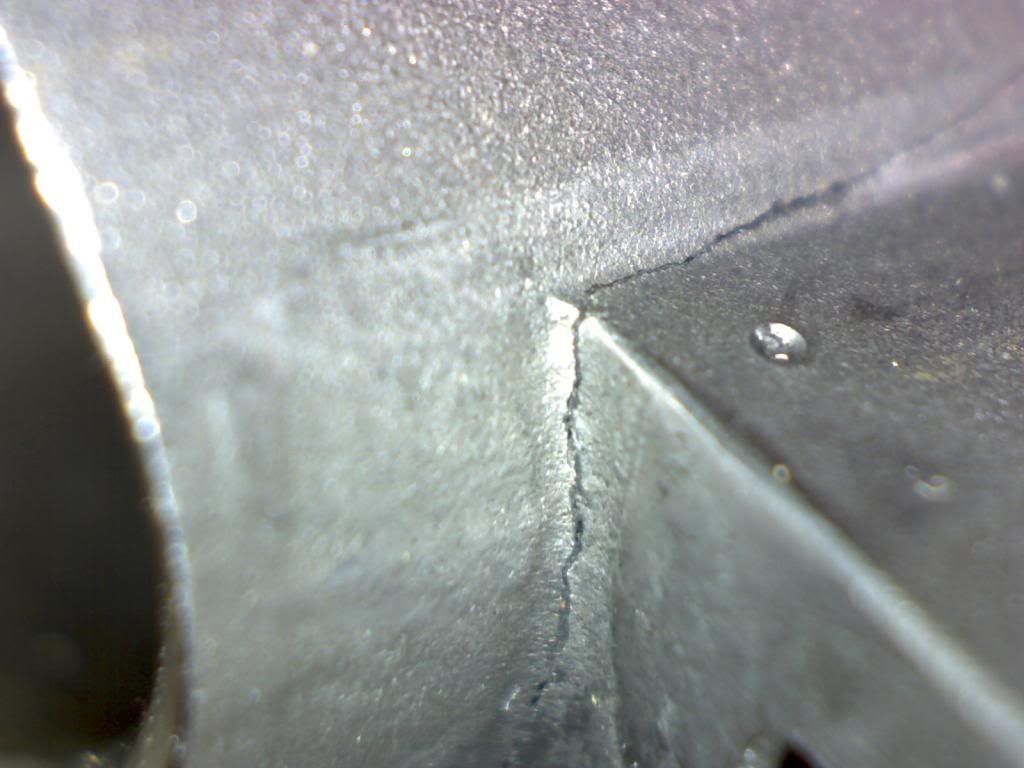
Another factor would be not having a decent fillet where the barrel foot joins the barrel body. I’ve seen some that were pretty sharp and they weren’t breaking but it really should be there. Talking here about a small fillet like maybe .015. Usually if they have anything it’s more than that like .030. This Kart barrel had it.
Now, I did not fail Rob in checking this the first time I worked on the pistol-- I made the relief cut in the frame. I know I did because the tool I use, which I made, leaves a little telltale standing nub in the center. The nub is smaller in diameter than the slot in the barrel foot that accepts the barrel link, so there’s no issue leaving it there. This nub is still present in this pistol but at almost 90K rounds, the impact surface has been battered back so that the barrel was once again making contact down low. It’s simple-- each impact has leverage when we have that low-end contact. When it’s up high toward the barrel body, it’s shear forces only and the barrel foot can take it.
As I say, many, many 1911’s have this condition. Might not be a problem if the user is not shooting tens of thousands of rounds. On Rob’s gun obviously this condition re-appeared gradually over 88K rounds… I just wish I’d been more diligent in checking it for him on those occasions where I have access to the pistol maybe twice a year, but I’m sure I probably glanced in there and said, yup, there’s the nub, we’re good.
A close-up, showing the barrel had decent root fillets.