Part 5
LWRC M6…
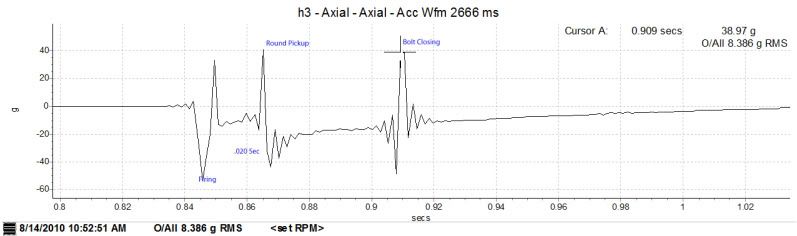
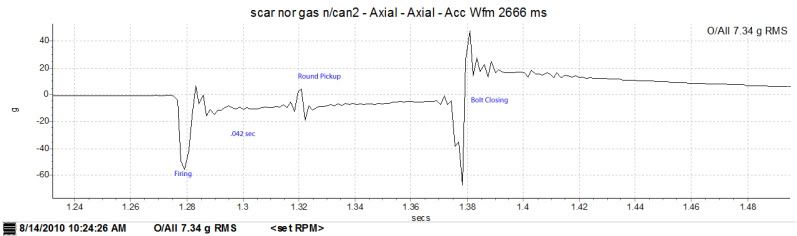
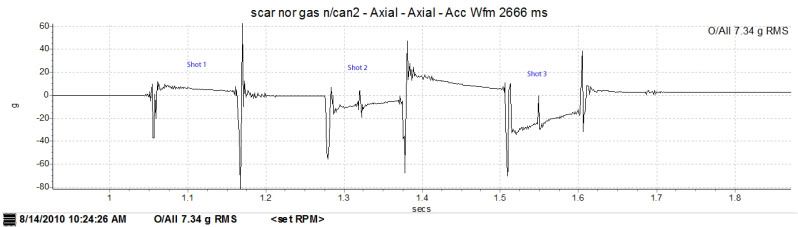
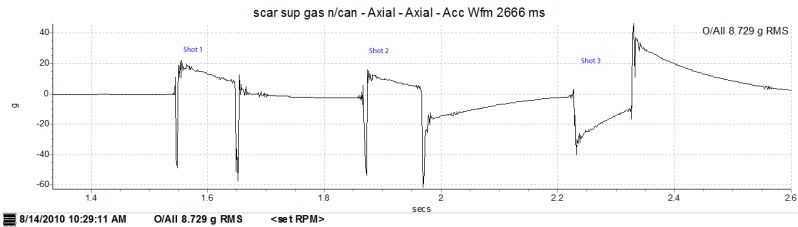
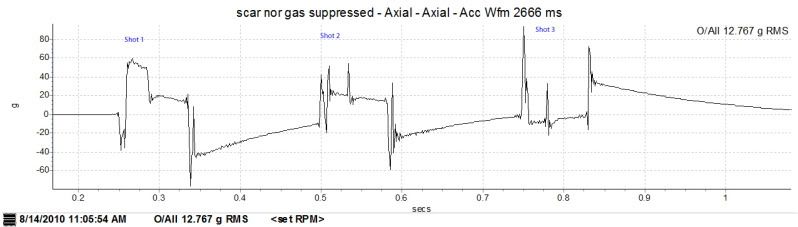
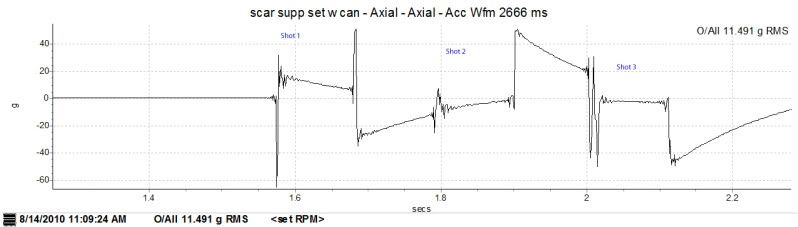
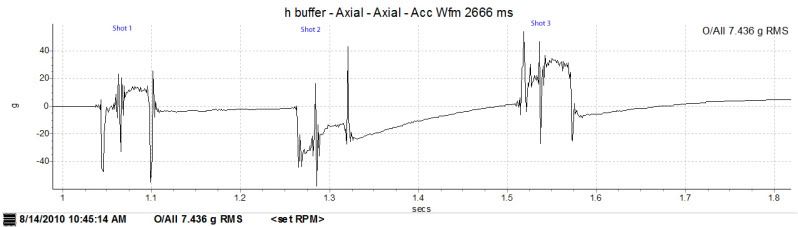
The average ROF of the LWRC on setting A was 928 RPM.
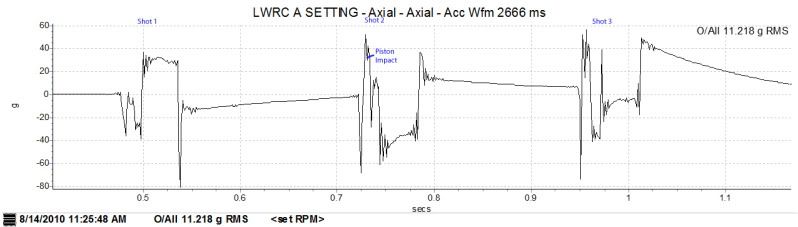
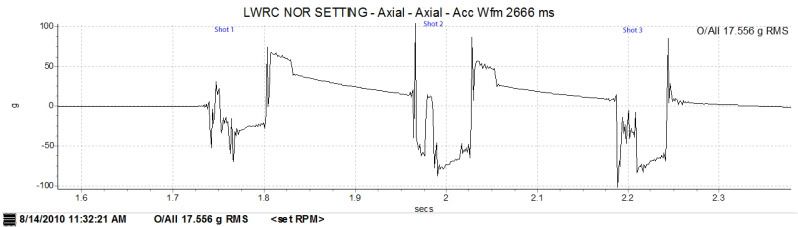
The average ROF of the LWRC on the normal setting was 947 RPM.
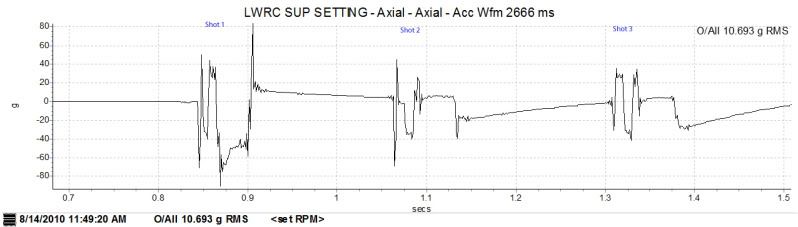
The average ROF of the LWRC on the suppressed setting without a suppressor was 855 RPM.
The average ROF of the LWRC on the suppressed setting with an AAC 762SD was 1018 RPM.
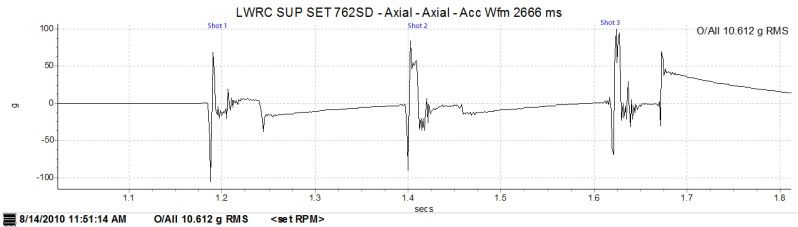
The average ROF of the LWRC on the normal gas setting with the AAC 762SD was 1005 RPM.
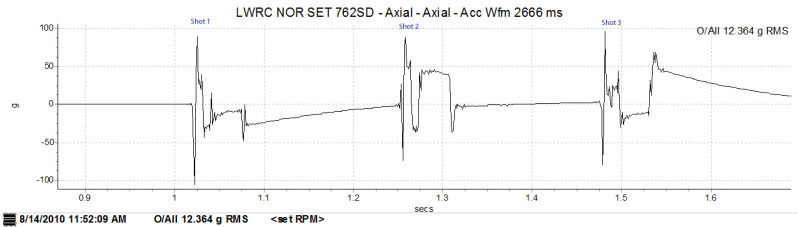
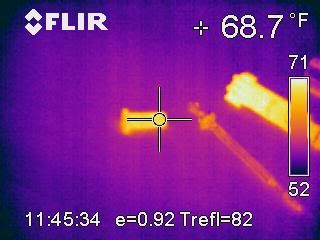
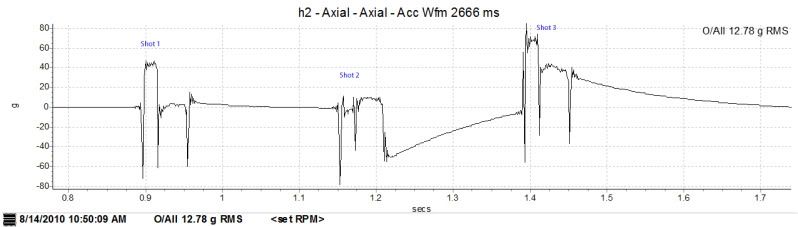
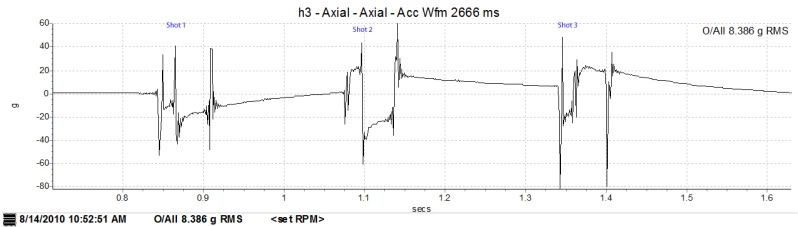
With the gas setting regulator on the LWRC, I expected to see a little more deviation on the cyclic rate. I was quite surprised that the cyclic rate with the suppressor and the gas setting on suppressed was higher than being fired suppressed on the normal setting. I do realize that I am an example of one with one rifle, and I imagine it might be different with other rifles, but it was none the less surprising to me. I also had a Noveske N4 Light 14.5” Switchblock on hand to fire. Of course the Noveske would not completely cycle on the suppressed setting, which makes calculating the suppressed setting ROF near impossible, but I did get the ROF of the normal setting.
The Noveske had a ROF of 714 RPM.
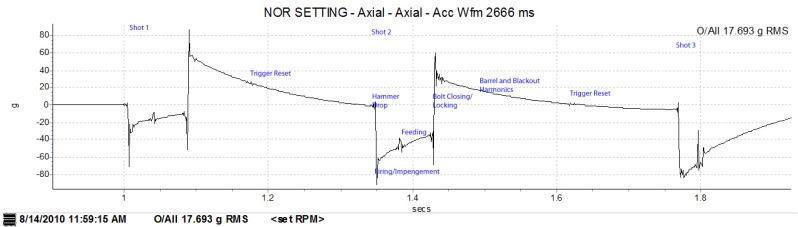
The Noveske also exhibited a very smooth, clean cycle of fire, more so than my 6933. I did not get the opportunity to fire the Noveske suppressed, but I will in the future along with a full length 20” AR, and a 16” midlength. I would love to do the same thing with Grant of G&R tactical’s suppressed only SBR. I would say, in looking at it from the perspective of the vibration readings the Switchblock is a step in the right direction for the DI system, especially if one intends to run a can. I would imagine the same could probably be said for what Grant is doing with the suppressed SBR designed to function with suppressed fire only. I had a conversation with Ken Elmore of SAW via email long ago where he expressed this same opinion, that for an AR to run in optimum condition suppressed it should be set up to function suppressed only.
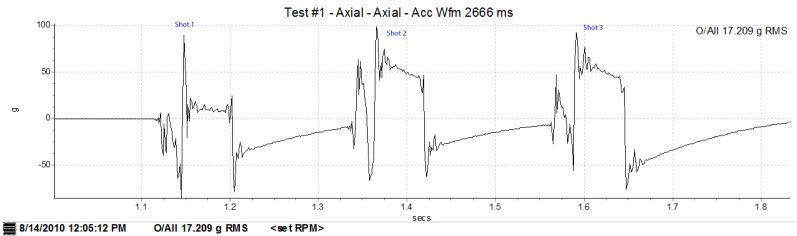
I also had a Norinco 7.62mm AK on hand. I found the average ROF of the Norinco to be 716 RPM.
Parts availability/review. You read this online all the time, “lack of parts is a deal breaker for me……”. This is how I see it. How long after the AR15 was introduced to the public market were barrels, bolts, extractors, action springs, buffers, BCGs, gas keys, FCGs……easily and readily available? If you had an AR15 in the early 1960’s and it broke, what did you do to rectify the situation? Furthermore, how long after the 1911 was introduced to the public market were parts outside of Colt available for it? The Scar has only been around for a few years, even less in public hands. In those few years it has undergone very extensive proofing and testing, more so than the ubiquitous AR15 and 1911 combined during their inception. The first civilian Scar 16s sold when, around the 1st of January 2009? You can currently get some parts for the Scar. Anything else that breaks, FN will hopefully take care of it. I have talked to several folks who were shooters in the time around the introduction of the AR. From what I have been told, for the average Joe parts for the AR were non-existent for years after it was introduced for sale. The US Military is using the Scar FOW operationally. I can only imagine other countries will do the same in time. I, at this point, don’t feel this is a valid enough reason to drop a system that can be shown to be a better machine. As far as parts price, Colt has long been viewed as the gold standard in the AR world. Has anyone ever seen new Colt parts that are cheap? A Colt Bolt is around $160 from Colt sources. I realize you can buy other makes that are just as good for less, but that is really comparing apples to oranges to me. I don’t even consider the availability of parts not made to the TDP. Not with my money. Colt parts are high, and so will factory FN parts.
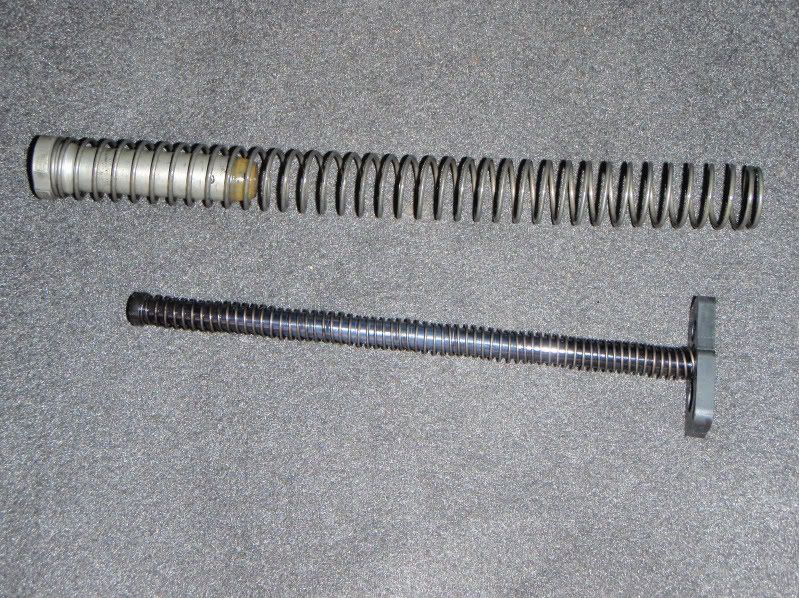
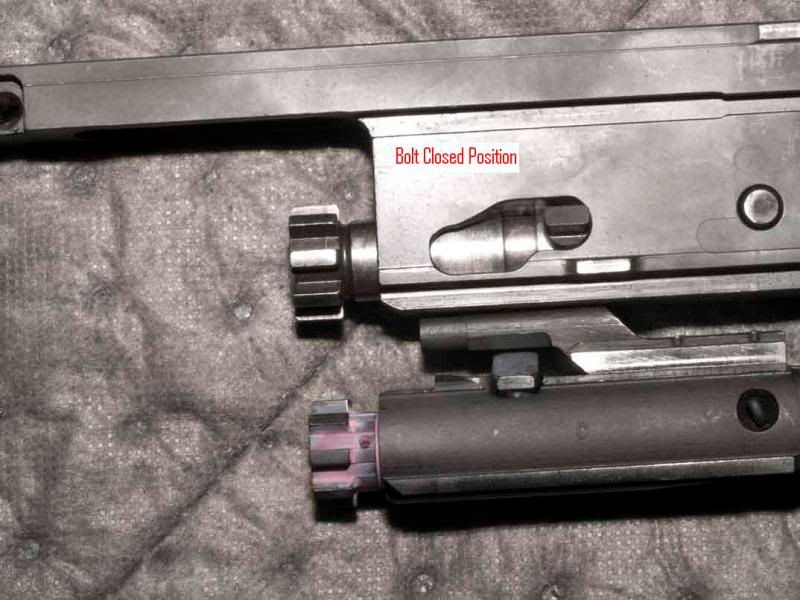
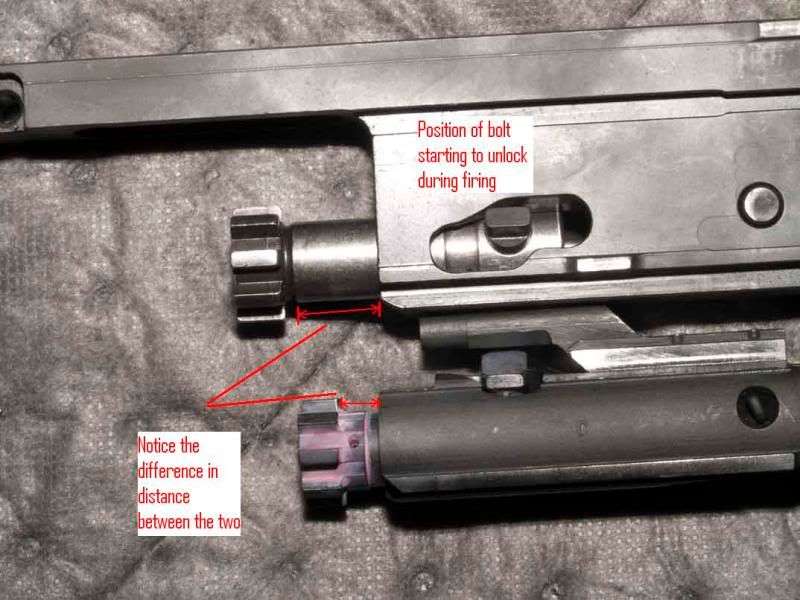
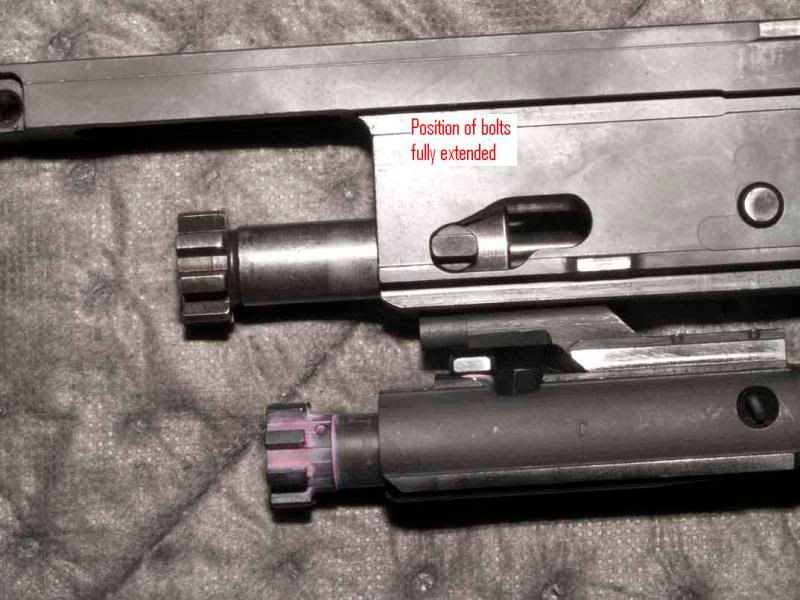
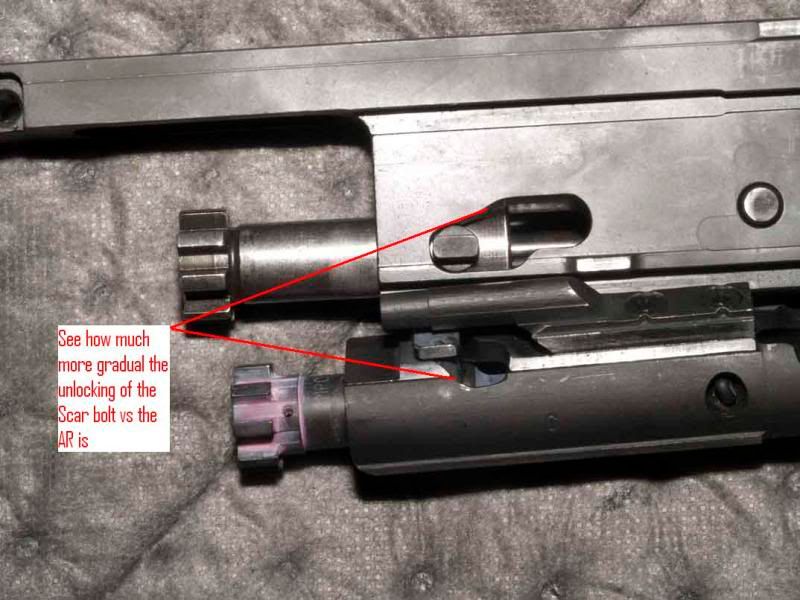
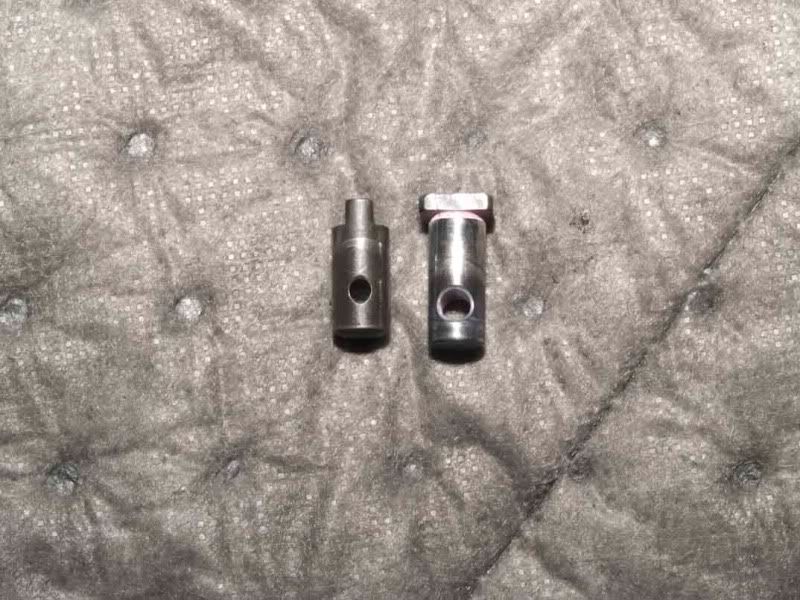
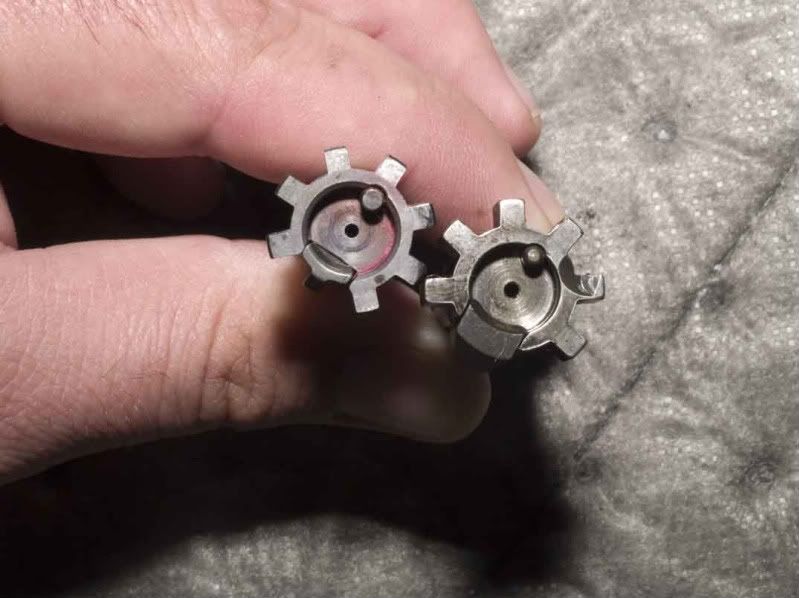
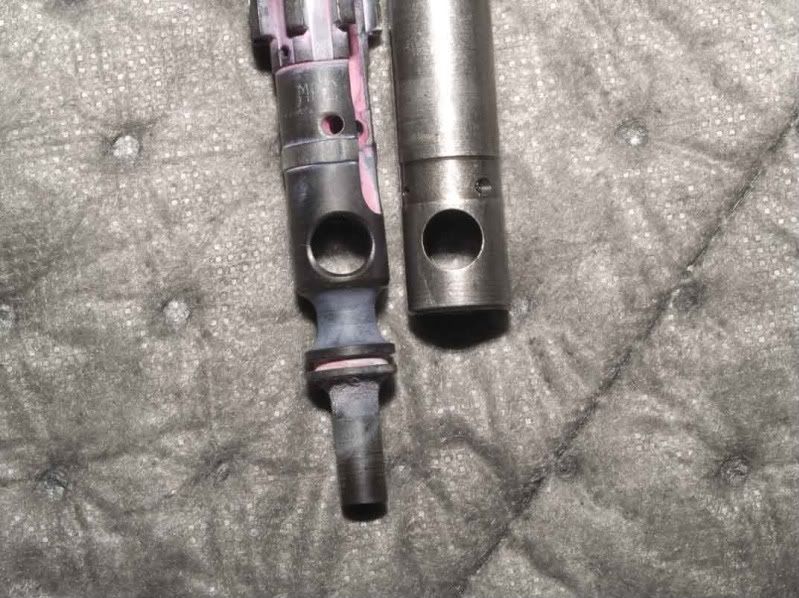
The timing increase during the feeding cycle over the AR should help with some feeding issues common to the AR15. The timing of unlocking of the bolt is longer on the Scar, which should help in some common extraction/case head separation issues. The heavier mass of the carrier should help in some common AR feeding issues as well. The moving parts stay significantly cleaner and cooler, with no apparent degradation in accuracy common in some long stroke piston systems. The firing pin retaining pin issue should no longer be an issue. Hopefully the shape, size of the bolt and gradual twist of the cam pin slot will make the breaking of the bolt at the cam pin hole no longer an issue. The increase in extractor size and length cannot hurt. I think the polymer lower will probably hold up fine, as there is really not that much stress on that area of the rifle unless it is abused. Although there is a love/hate relationship for some of the charging handle, one cannot ignore that the bending, breaking, shearing of the AR charging handle will not be an issue with the Scar from using one hand to pull the charging handle to the rear. Not to mention the ability to lock the bolt to the rear without an aftermarket part or taking your firing hand off the grip. Most all of us who train or read the training AARs, know that taking your firing hand off the grip makes a certain short colorful Irishman from NY spew foul language, and probably kick puppies and babies in private at the end of the training day, not to mention what it can do to you in a bad situation. The lower rail does an extremely good job of pulling heat away from the chamber area of the Scar barrel, and even though the barrel heats up fast, it cools fast as well. I do not foresee the 5.56mm cartridge going anywhere anytime soon. If it does, the modularity of the Scar system could easily lend to adaptation of another round. Figure out a reliable magazine design for said new round and tool up the injection molding machines to make the lowers. I think the weight of the current crop of Piston ARs is also a drawback, especially the front end weight which leaves you with an unbalanced rifle. You still have charging handle issues, you still have the same length of bolt travel, cyclic rate is close to the same (which gets back into giving the round time enough from less than optimal magazines to present itself for feeding). You get too thin profile of a barrel on some piston guns and accuracy can suffer. The folding stock, while it may not be beneficial to some, can be a deal winner for others. Think about the space saved in an already cramped and overfilled patrol car front seat. If the proper cruiser rack were available, the Scar would be very easy to charge in route to a hot call. Technically, the way an AR has to be charged one handed while driving is the exact way that causes some charging handles to shear and break roll pins. Not to mention with the Scar sitting immediately to your right in a rack, you can glance down and visually reference that the bolt closed while in route. You would have to roll an AR inbound or feel it to tell this. Pop the magazine out and you have your loaded round indicator. For undercover work, a 10” AR would have to be broken down to fit in the same size bag as a folded Scar, then would not be readily available should trouble arise on the way into position like the Scar would.
Things to Improve/Concerns:
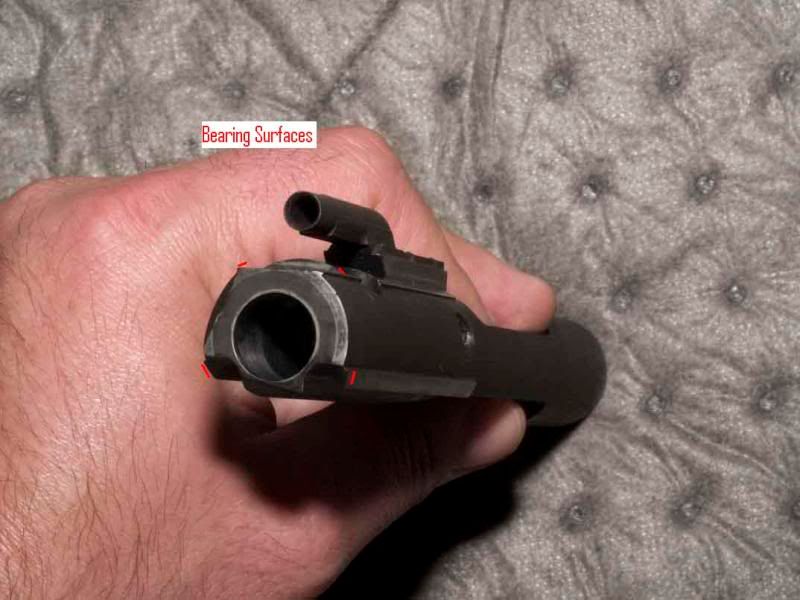
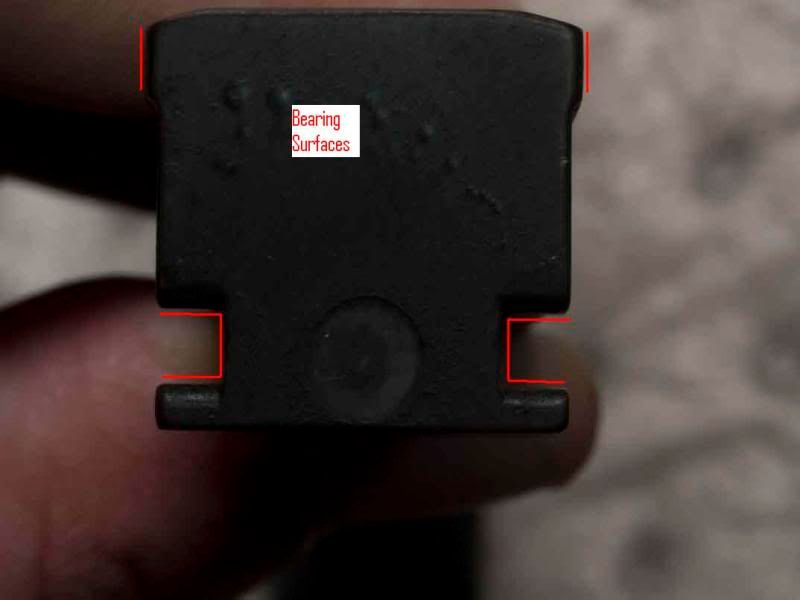
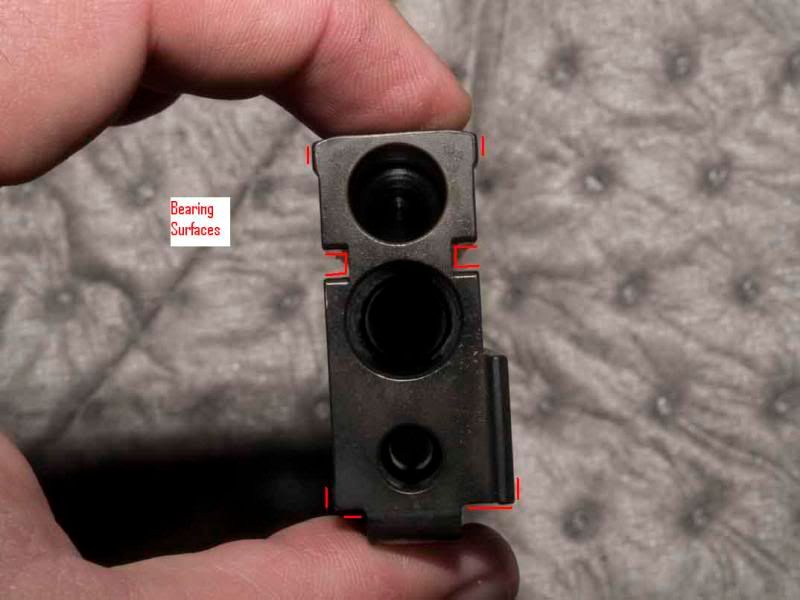
Lubrication: The manual states “to lightly lubricate all moving parts with CLP”. I realize this manual has to be written so the lowest common denominator of society can read and understand it, probably for liability purposes. I disagree with this procedure though. I know the military heavily uses CLP, and possibly that is why it is suggested, but anyone who is reading this knows there are far better lubricants available than CLP. The motion of the carrier through the upper is almost identical to a sliding glide linear bearing. Most of those types of assemblies I have seen in use in other fields are grease lubricated. This is true even in some very harsh operational environments. I would say a good oil like Slip 2000 EWL, Mobil 1…would be great on the bolt, cam pin, inside the bolt housing, but a good grease would probably be better suited for the actual bearing surfaces of the carrier. Not a lot of grease, just something to keep the metals from rubbing. The carrier is not subjected to heat like the AR15 carrier is, so a good grease should not turn runny and cook off. A benefit of the grease would be it will be more apt to stay put during use in rain or water. For very harsh environment use, I wonder how something like the dry lubricants and surface treatment agents from Molykote or other companies would do in this application. If they would hold up and work well over time, yea it might be another step/expense in manufacturing, but make the rifle a little more suited for harsh environment use.
Sling attachment. I can’t help but wonder if they would not have been better off making the hinge part that attaches to the rifle and the stock latch out of aluminum. That would give some area to place the recessed sling QDs, similar looking to how the KAC SR15 E3 rifle looks. A QD should have been a no brainer as well.
Rail space; maybe bringing the upper out and around the gas block, but not completely surrounding it so to still allow for barrel removal. Just enough to give a little extra room to accommodate different lights. Of course, over time lights will probably grow smaller and smaller, so it will probably become less of an issue.
I noticed that the carrier impacts on just one side of the barrel extension. The carrier has a good bit of momentum when it goes home. I realize the chambering of the round softens this somewhat, but still I have to wonder if longer term issues may arise from the carrier making contact on just one side of the barrel extension. It may be a non-issue, and may be done for a reason; but it is just something that stuck out to me.
I have read online, and I have no firsthand knowledge of this, that there have been some cases of stripping the threads out on the holes that secure the barrel to the receiver. If this is the case, would it not be a good idea to make the holes in the barrel assembly oversized and use helicoils in them? That way if one is stripped the helicoil can simply be replaced. Would the helicoil not be a viable fix for someone who does happen to strip out any of those holes?
P-mags: One cannot ignore the P-mag is one of the most popular magazines out there. My Scar would not reliabily drop the P-mags I owned free. I have prior to buying the Scar, invested a good bit into a stock of P-mags. Lots of other folks have done the same. I really at this point see no reason to buy anymore aluminum magazines for my AR/Scar. I cannot understand, why the Scar 16s lower would even have an issue with the P-mags from the start. I know it goes back to the Mil probably spec’d out the GI mag, but how many P-mags are in use in the military now? It only makes sense to me to make them compatible. I measure the Colt magazine well and compared it to my Scar. I didn’t really have an issue on the side to side dimension, just the front and back. I got 2.3980” on the Colt and 2.3925” on the Scar. OK, almost .006”. Sounds like work for my sanding stick.
Future Maintenance Issues/feedback/problem sharing. With a new weapon system, or any machine for that matter, will come unfound issues and trouble down the road. I am not going to sit here and pretend the Scar is perfect and will not have issues crop up as time goes on. I have seen way to many “perfect” products break in my job to subscribe to that. I do believe in this, all things man made can break; those that were designed and tested thoroughly, made well by craftsmen who care about the product they turn out, and assembled of the right quality materials for the task at hand will tend to break less. Just about all industry is the same in the following regard, but I have noticed the firearms industry is especially close looped in manufacturer to user communication. I will not name names, but there is no shortage of examples in Mil, LE, and Civilian circles of certain re-occurring problems cropping up in certain guns or accessories. The song almost always goes, “oh, it’s not a problem with our product, it is a user issue” or “our guns are the example of perfection, they don’t fail you must be mistaken, it was your fault, here use our weapon light instead”. Only to find out later on down the road, lots of folks were having that very same problem, and guess what that manufacturers perfect product, well it went through redesign to fix the problem they said wasn’t a problem to begin with. With a new system coming to bare, this would be a great opportunity to get out of this cycle. With the current crop of well informed gun forums online, if FN steps up and (without giving away trade secrets) uses these resources to communicate back and forth to consumers any found future issues, problems, benefits…, just think what a breathe of fresh air that would be. They have the opportunity to set the example here. A whole cottage industry of Americans have jobs, thousands of parts are made in the US because of the AR15. I think the Scar has the ability to be even more modular than the AR, and if supported over time could help get even more people to work here in the US. The bottom line of any company is to make money. FN will be making the parts for the Scar anyways, why not make sure there is enough for end users to completely support their rifle from the start. Doing so will eliminate the excuse given by many for not buying the Scar due to the parts issue. For a system based on modularity, give the end user the choice and ability to change and replace their barrels. Someone is going to eventually copy the receiver extension and make their own gas block, then sell their own barrels. Might as well be FN making the money, right? If the Scar does take a big hold in the Military, be it the Mk16, Mk17 or both, communicate the problems found through use and abuse to the users who spend their hard earned money on your product. Don’t do like some other companies have done in the past. The fate of the free world will not rest on whether the users on the civilian side of the house find out that down the road there is an upgrade to the extractor spring or barrel diameter and they don’t have it. In all seriousness, if it weren’t for the material passed on through the years of experience and hard work from folks like Dean Caputo, Pat Rogers, Larry Vickers, etc., what would we know about how to properly set up, maintain and shoot an AR15 or M4? The Pony Company isn’t readily giving that information out. An example would be weapon specific malfunctions. Certain weapons exhibit malfunctions that are unique to that weapon. Then there are weapons specific ways to clear those malfunctions. If there are any known, pass on the knowledge. Get the right information out from the beginning with a central reliable source of information, so that 20 years from now we can avoid the misinformation nightmare that we have with the M16/M4/AR. That way we don’t end up with some poor cop or soldier getting wounded or killed because he was instructed from so and so to “put a light coat or oil on the moving parts” when he should have been lubricating it significantly with a good quality oil.
We know that the DI AR will run for a long time, even if cleaning is neglected, so long as it is lubricated sufficiently. Go shorter than the original design, and parts wear more frequently. It is the nature of the best, plan accordingly. I have several and do not plan on parting with them. I am not arguing that point. But a weapon like the Scar will on average run, with significantly less lubrication, less maintenance, and less down time than the DI rifle will. How is that not a plus? I am just looking at it from the standpoint of I have a task of, lets say shooting 10,000 rounds of ammunition accurately at a target over a given period of time using a weapon purchased with my own money. Why would I choose machine “A” my factory Colt 6933, a system that is exponentially dirtier, hotter, requires significantly more lubrication to account for the lubrication burnt off by the heat of the parts than machine “B”, my FN Scar. Machine “A” is more labor intensive to keep running properly (cleaning carbon crud from the heart of the system). Machine “A”, as comes from the factory in standard configuration does not handle the heat off barrel near as well as machine “B”, nor does it give me the option of mounting accessories to it. So I have to buy a free-floating rail system to help with cooling, accuracy, and mount stuff to, aftermarket part number one. Machine “A” comes from the factory with extractor spring “x” installed, but it is widely known that is not the best spring to make machine “A” run in optimal condition. So aftermarket part number two I have to buy. Machine “A” also does not come from the factory with the best buffer weight for that length barrel/gas system. Machine “B” does. So I have to buy an H2 or H3 Buffer for machine “A”, aftermarket part number three. Machine “A” is not ideally set up for the employment of optics and BUIS like machine “B”. So I have to scratch the carry handle and get an aftermarket BUIS. Pretty soon, to get machine “A” up to the capability of machine “B” I have spent close to the same amount of money. Granted there are DI systems that come setup right from the start, but the difference in cost really becomes less and less. In the end, it is the individual’s money and decision. Just make sure you make your decision based off your actual needs and facts. I for one am quite happy with what I have found with the Scar. I think as far as a machine goes, FN did a pretty good job with it. Thanks to my Father, Roger, Dean, Karl and a few others for their help in making this happen.


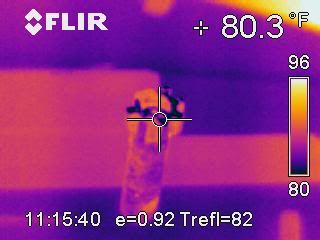
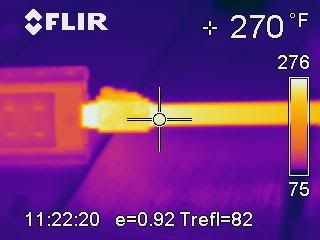
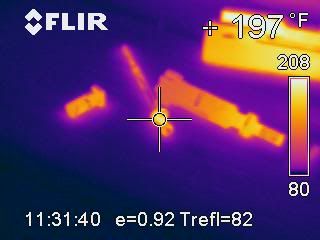
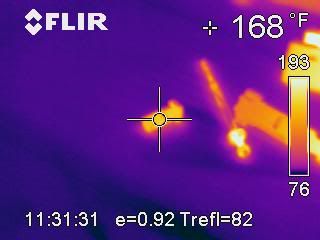
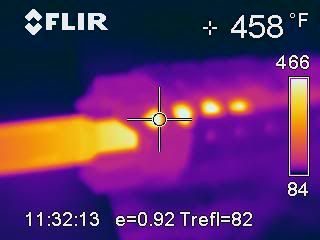
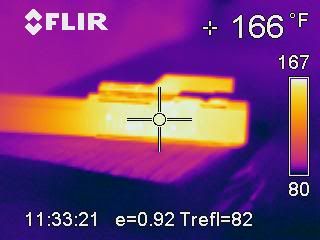
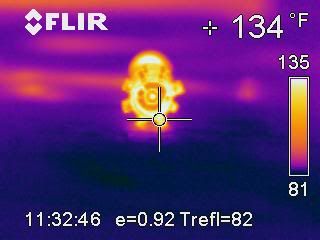
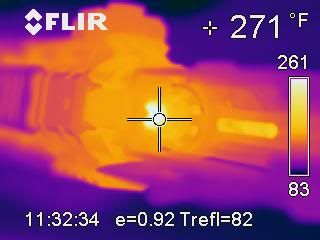
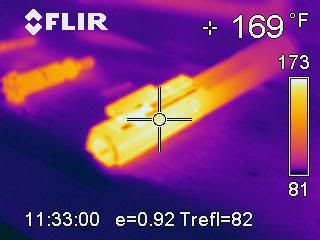

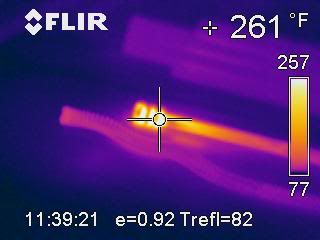
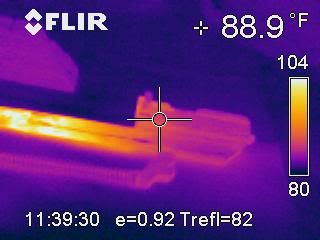
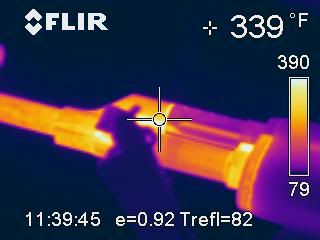

 ).
).