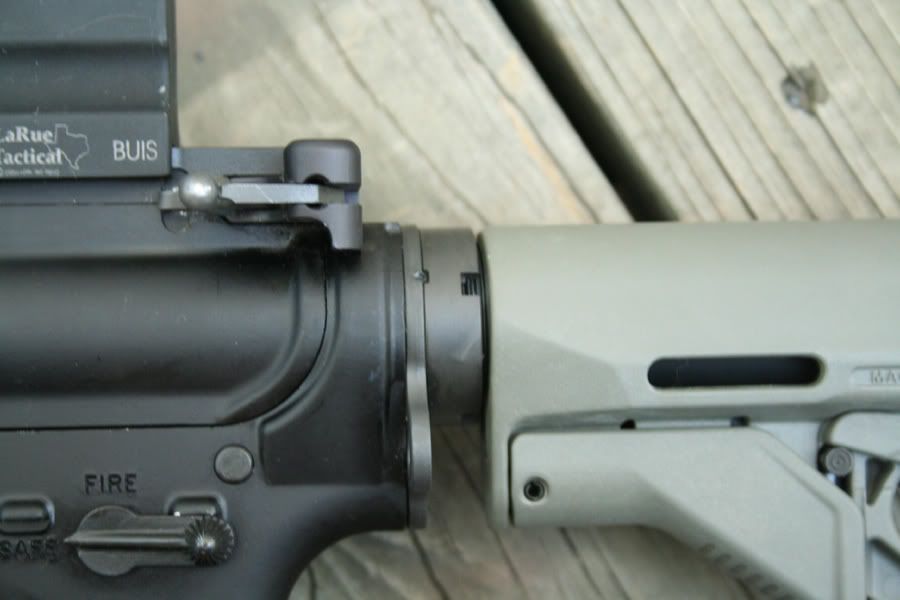
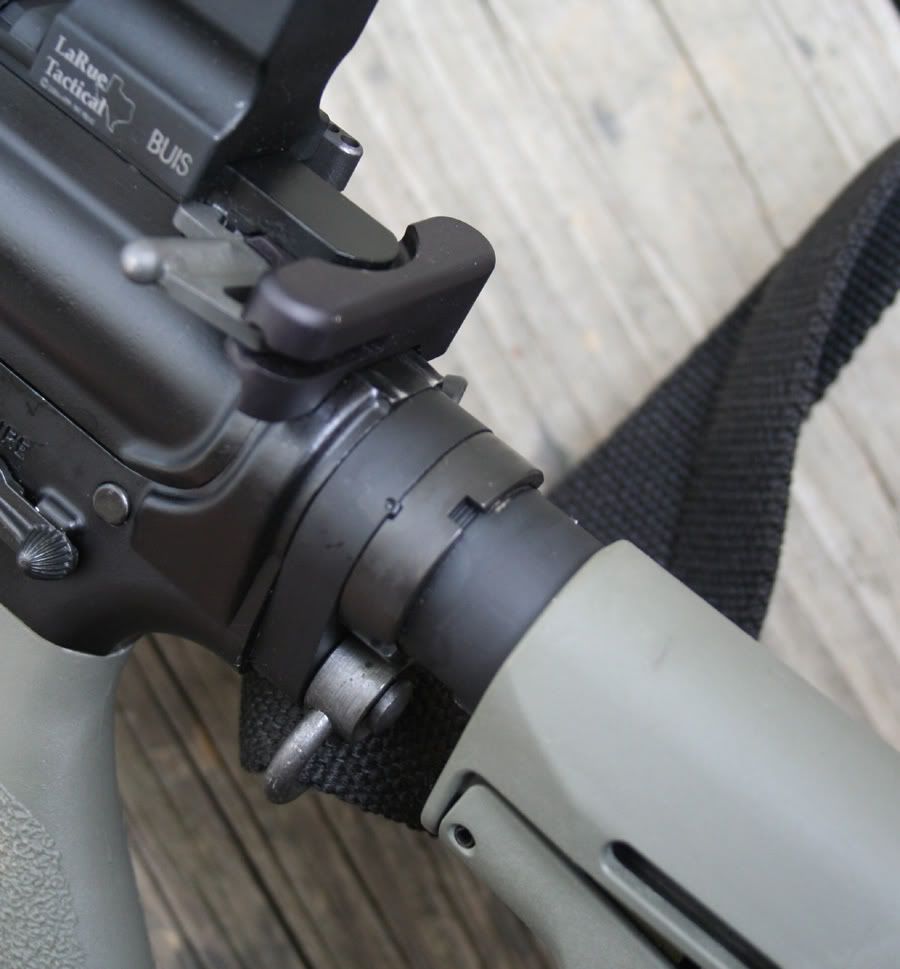
I personally don’t use one. I’ve seen people use a torque wrench and then stake the castle nut to the receiver plate so it can’t get loose over time.
I don’t think a torque wrench or staking the castle nut is necessary. I just crank the castle nut as tight as I can and then use a small punch to tap the castle nut a little tighter for good measure. I have never experienced any problems.
I agree, hand cranked is fine, vibration from a semi-auto is not going to make the nut back off. No need for loc-tite and I have no idea why someone would put anti-seize on RE threads, that’s counter intuitive to loc-tite, plus there’s not enough heat to seize the threads up there anyway
You should use Moly Disulfide grease (just a little). The proper torque (40 +/- 2in lbs) and staking will hold it. Don’t 2nd guess the guys who wrote the TM, they knew what they were doing. Proper torque and staking is necessary because the castle nut can and does come loose it not correctly installed.
I stake with a spring loaded punch.
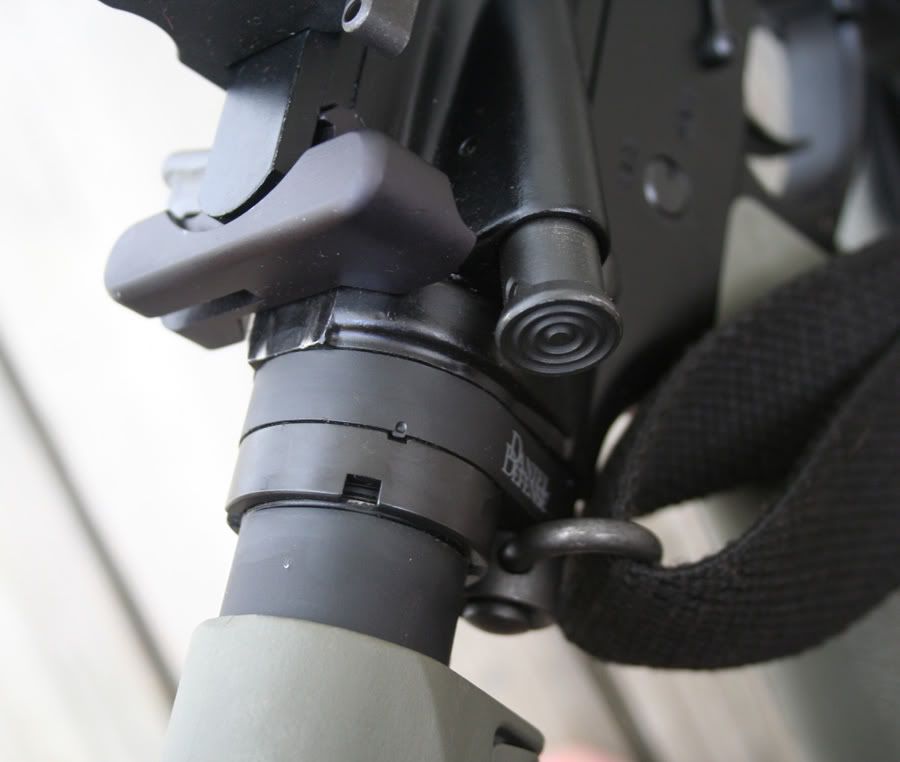
My LMT with a VLTOR receiver end plate.
My LMT now with a Daniel Defense receiver end plate.
You really do want to torque and stake the castle nut. The weapon has been around for a long time. The guys who write the Technical Orders on them learned by failure.
I think if you do enough of them, you can get a feel for the proper torque value. In the beginning, I measure everything, but once I got a feel for it, I stopped using torque wrenches for everything.
I am not a fan of ANY loctite. If you install it properly and stake it, you don’t need no stinking loctite (cough RRA cough).
I was looking in the TM today as I am completing my first build. I noticed that the TM requires GMD (grease, molybdenum disulfide) on the receiver extension. I already installed an Ace SOCOM stock. The instructions from ACE do not mention GMD. Since the Ace stock does not use a steel nut is GMD even required? Should I remove the stock and reinstall it with GMD?
Guys,
The reason for using Moly Grease is to prevent the threads from galling up, when you torque down the nut tightly. The soft aluminum on a receiver can gall up, especially when harder steel nuts/etc are tightened down on the threads. The Moly Grease prevents this, and should also be used on the bbl nut as well. It is NOT meant to act like Loc-Tite in any way.
I know many of you already know this (gotm4, Randall, etc), but I thought I’d mention, since it has not even been brought up in this thread yet.
On a similar note,
I have never personally found the ideal staking tool for a castle nut.
Randall, or gotm4,
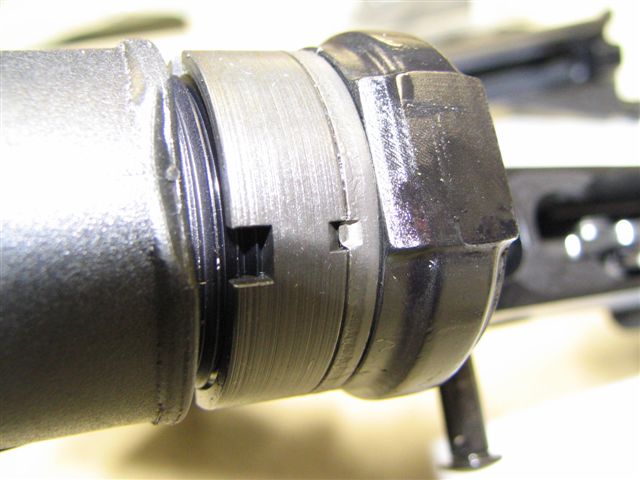
What do you guys use to do those beautiful, picture perfect staking jobs on the castle nuts you have pictured?
Is a a sharp pointed punch working best for you guys, or something more along the lines of a 1/16" punch with a flattened face, or what?
I was thinking about a 1/16" tip center punch, which comes to a point I believe.
What say guys? I’ve got a couple to do soon, and I want to have the preferred punch for producting those perfect staking jobs.
I’ve got a number of punches, and could probably make a number of them work, but just thought I’d check with you guys to see what you think is ideal?
Also, Armati,
When you mentioned looking at your “TM” manual today, I would like to ask you WHICH specific TM are you looking at? I know there are a couple/few different manuals, which cover various info, and I’m still trying to determine what all exists, and what is being used the most. Did you possibly get yours off of “Sethspages” (I think that’s the correct site), which is that website with all those Mil. manuals online for viewing???
Just wondering which specific TM you’ve got printed out, or are referring to online?? Do you have the TM # designation?
I have taken to using a sharp center punch and just punching about 1/16" in from the edge.
This lays a nice little bit of metal over into the provided clearance.
The stake in the picture above is most likely done with a flat-blade ground punch.
It would be shaped like one side of a flat-head screwdriver blade.
“shaped like one side of a flat head screwdriver blade”.
I’m not so sure I understand this shape/design.
The “one side” is what throws me off. Both sides of a flat head screwdriver are symmetrical, so I just don’t follow that comparison.
Are you just describing a punch that is ROUND (like all other punches), but has a FLAT face ground on the side of it?
Trying to grasp this here…
Thanks for the help guys. I was pretty sure given the ACE SOCOM stock attaches moly grease would not be an issue. But, I also know there are a lot of guys here who know what they are doing.
TM 9-1005-319-23&P with Change 8 dated 15 August 2005 that I downloaded from here:
Imagine a center punch that’s modified with 3 flat sides and a flat end.
Like a slot screwdriver, but you don’t need to worry about making the 4th side of the blade flat if you don’t want to.
You could just take a medium sized screwdriver and cut off 3" of the blade and use it as a staking punch.
I am with Grant. If you have done enough then you can do it by feel. I personally use a small amount of anti-seize on the threads, vice molybdenum. Primarily because it was easier to get. Then it gets staked in (2) places. Have yet to see one have an issue after it was done properly.
One thing that I have noticed on some of our guns here is someone applied red loc-tite to the threads and cranked them down. Yet, just the other day one was brought it where the lower receiver extension would move left and right. Doing the work correctly is the key, not putting red loc-tite on there and cranking it down.