**SLR15 LAW ENFORCEMENT SHOTGUN ARMORER COURSE
**
When: March 4-5, 2026
Where: Boston, MA
We conducted a 2-day (16-hour) Law Enforcement Shotgun Armorer course that was hosted by the Boston Police Dept. This was our second time teaching an Armorers week of courses here, and we look forward to more in the future. The training room was set up to allow plenty of table space and great lighting to see small part & wear. The room had a large multi HDTV system which allowed us to project some animated graphics of the weapons system, powerpoint detailed pics of gun parts and weapons animations.
This course covers the Remington 870, Mossberg 500/590’s, and Benelli M1-90/M2/M3/M4 type shotguns. Officers are welcome to bring other shotguns as well, we only request that if they need any possible replacement parts that they bring them with to the class if possible.
This class was all Law Enforcement Officers from Massachusetts.
The shotguns present in this course were a mix of mostly Mossberg 500/590’s, but there were a few Remington 870’s and Benelli M1-90’s. Officers can bring shotguns to work on, and we always recommend that Officers bring shotguns that are not working correctly or broken, as we look at this as a learning opportunity to figure out what is not working correctly, and Officers can make repairs onsite to get them back into working condition.
We started with an introduction of all present. Everyone was supplied with a course manual, inspection forms, and supplier lists of where to obtain parts, tools and accessories. We supplied every student with their own set of basic tools that are necessary to do most of the general work on the shotguns. Everyone was introduced and supplied with Slip2000 “EWL” Extreme Weapons Lubricant and #725 Cleaner Degreaser.
We showed our procedure of a series of checks that we use to make sure everything is working correctly, and why we use this series of checks. Everyone was taught a hands on session of the eight cycles of function on the shotguns. From there we broke the same eight cycles down further in greater detail.
We went through the proper way to remove barrels from each type of shotgun. With the barrels removed, they were inspected, in this class I think every barrel was heavily fouled. The fouling inside the barrel is generally plastic from the shot wadding, mixed with powder and shot residue. Everyone was shown that they needed to clean the chamber and bore, as these are different diameters and require different brushes. They were also shown all the other hidden areas of the barrel that need to be kept clean for proper functioning of the bolt assembly and barrel to receiver fit for lock up etc. Also shown were a multitude of tools, brushes, and jags for cleaning the barrel. Everyone with fouled barrels were allowed to clean them, as a hands on session of trying the different methods and tools shows what works better. Everyone was supplied with Slip2000 #725 Cleaner/Degreaser, Slip2000 Piston Parts & Choke Tube Cleaner, Slip2000 Carbon Killer, which help to cut through the different types of fouling. After a short session of barrel cleaning, the fouling was removed.
There were several barrels with heavy fouling build up. We showed how to clean this fouling, then turned people loose to clean barrels and get the heavy plastic fouling out. We supplied people with shotgun chamber brushes and rods, most weren’t aware that shotgun chamber brushes existed. We also showed where shotgun ammunition may produce different types of fouling, from the plastic fouling, and black powder fouling as well. We supplied several different types of brushes, cleaning rods, solvents, jags,patches, etc, and people put them to good use.
Everyone got a hands on use of seeing how the different Slip2000 solvents work, especially 725 Cleaner/Degreaser, Carbon Killer and Choke Tube Cleaner. The Slip2000 Choke Tube Cleaner is great stuff, we use it on shotgun barrels, along with any gun barrels that get used for Simunitions, Force on Force, or UTM type ammunition where plastic fouling may occur. The Carbon Killer makes quick removal on black powder fouling. The Choke tube cleaner made quick and easy removal of the plastic fouling.
Barrels were inspected for damage, stress, missing parts etc. We also showed the differences between old and new styles of Remington 870 retaining cap designs, and showed why these shouldn’t be intermixed, and when I mentioned that barrels could come loose and fly off during shooting.
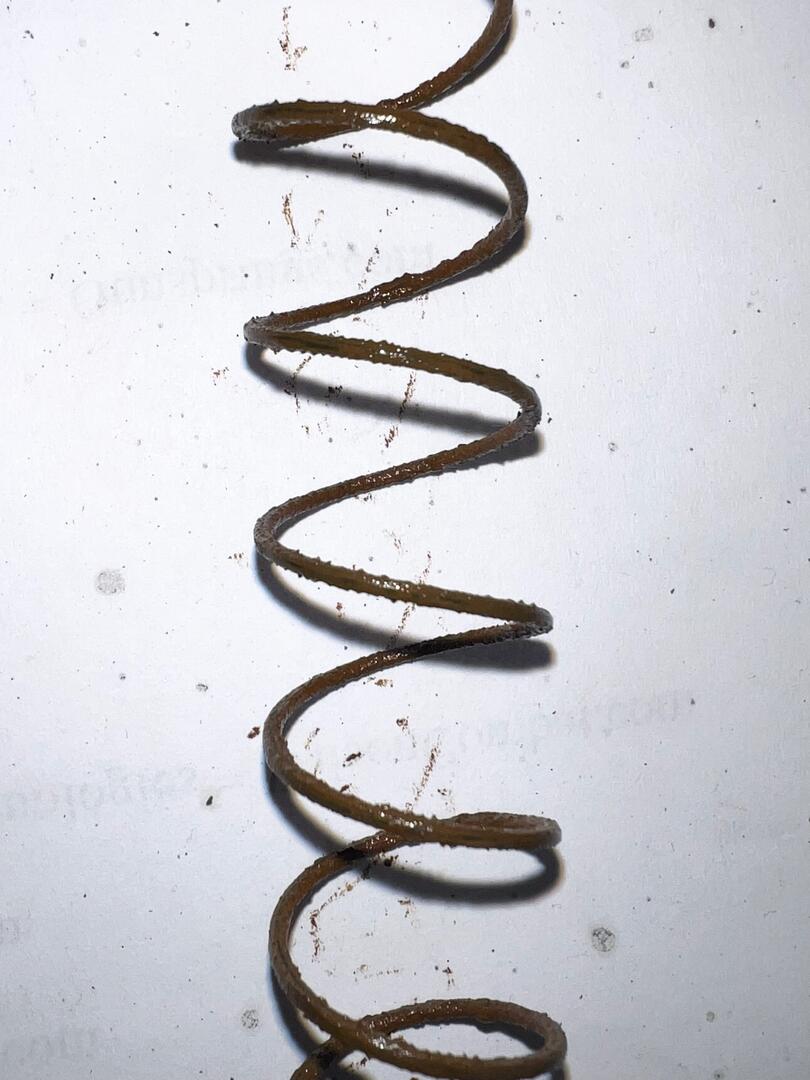
Note: There were a lot of Mossberg 590’s in this class that had heavy rust on the magazine springs. According to the Armory Staff from this agency, they had asked their Mossberg factory Rep about it and the response was that they had too much moisture issues in their armory. None of the other steel parts on these Mossbergs had rust on them, and no other brands of shotguns that were also kept in the same armory had rust on them of which included other brands of magazine springs, of which I pointed out to this agency’s staff that were in this class. So my opinion is that there has to do with the springs. These were all cleaned, inspected, and a rust protecting lube was applied to the springs.
We went through each weapon system showing how to remove and reinstall the actions. Once people figure out how to hold and align things in proper order, it gets easier.
Bolts were disassembled and reassembled, and inspections were done, showing where debris and corrosion is found, and why we recommend that certain things be inspected and cleaned on a regular basis. Armorers were introduced to splined pins, and shown the proper way to remove and install them. The 870’s were inspected for old versus new parts, the difference in era’s of 870 parts, and shown a hands on difference of forged vs MIM (metal injection molded) parts and why we recommend using the forged parts on police 870’s.
Magazine tubes and their internals were gone through. When we allow people to clean the magazine tubes using a magazine tube brush, it’s always amazing to see how much crud comes out, and IMHO the magazine tube should be scrubbed clean of debris on a regular basis. Magazine springs were covered, and there were a few students that had sporting shotgun springs, of which were replaced with heavier springs. Students were also shown why we recommend tactical magazine tube followers over the stock cup shaped ones.
Day-2 started with a review of day-1. We went back through the magazine tubes. Specifically showing how the tubes are mounted to the receivers, and how to deal with damaged magazine tubes that get dented, bent or deformed.
We then moved into forend assembles, stocks receivers and trigger groups. Forend assemblies (action bar assemblies) were taken apart using the proper wrenches, then the forends were inspected, action bars inspected, and things were reassembled and indexed correctly. It was shown how the action bars have a timing that controls the shell latches, and if the action bars are damaged or bent that the timing could be off. We also showed variations and evolution changes in the forends.
Note: Many of the less lethal guns had aftermarket stocks and forends that were orange in color, which makes them very identifiable for being less lethal. Most had loose forends. This allowed me to cover proper tools. and I demonstrated proper alignment, tightening, and checking for proper indexing. Everyone got to use all the different types of forend wrench, and use them to get things set up properly.
We removed the butt stocks. There were a couple of loose butt stocks. Once removed, we showed the different bolts and washers that are used. Stocks were inspected for cracks, and all made sure they had stock bearing plates and were shown their importance. We went through stock repair on wood and synthetic stocks, to include alterations. Receivers were inspected where stocks mount to, and repair and replacement was covered.
We then moved into trigger groups. Everyone was shown how the entire trigger groups work, what can be disassembled and what cannot due to availability of parts, inspections, maintenance, mechanical safeties, changes in designs, Police/Military models vs sporting models, and how the carrier integrates during cycling. We also showed common mistakes that people make with trigger groups, the problems in function, and how to correct any issues. After trigger groups were put back together, we showed how the carriers integrate, how the slides with action bars work, and how/why the lock forward cycle works.
Shell Latches on the Remington 870’s is where we went next on the weapons system. We covered proper staking and why, how they get damaged or misaligned, and their replacement. We showed several different tools for aligning and staking shell latches.
The next thing we covered was the ejector systems. We showed the 4 piece system of the Remington 870, and how it gets broken, and how to make a factory OEM parts replacement. We also showed the Sully 870 Ejector System, which is must easier to install and stronger in design.
The end of the day was a review, followed by all shotguns being reassembled, then inspected and gauged to make sure everything was in spec and ready to go back into service.
Here is a brief overview of what is covered:
Headspace and wear inspections
Action and function
Barrel inspections
Fore-end assembly & action bars|
Bolt assembly (extraction & spring, firing pin, retractor spring, flexitab cuts)
Ejector inspection, repair & replacement
Slide assembly inspection
Trigger Systems
Stem adjustments
Hook Space
Magazine spring, retainer & followers
Shell latches, inspections, adjustment & replacement
Custom accessories & enhancements
Maintenance
CY6
Greg Sullivan “Sully”
WeaponsArmorer
SLR15 Rifles
TheDefensiveEdge.com
(763) 712-0123