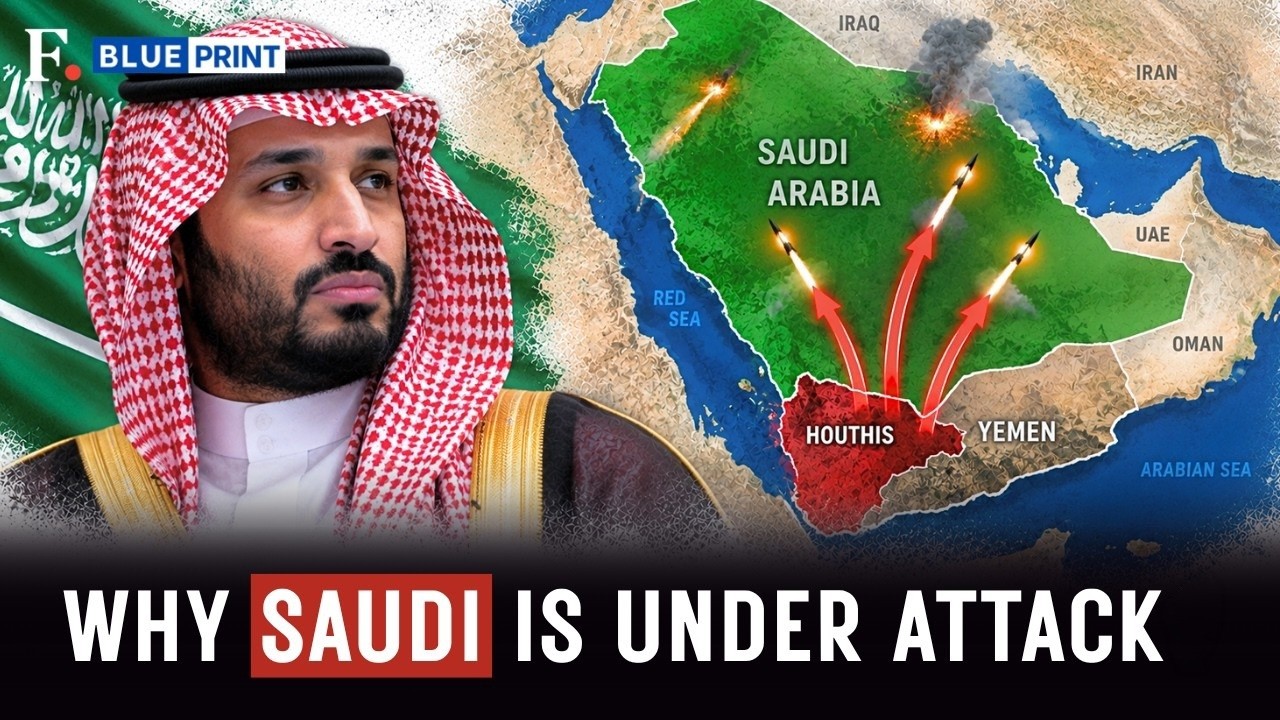
As that’s not going away and growing, a good vid that gives context to the conflict:
Why do the Houthis target Saudi Arabia more aggressively than any other country in West Asia? Every few weeks, sirens echo across southern Saudi Arabia as air defense batteries scramble to intercept incoming suicide drones and ballistic missiles. To casual news consumers, this conflict looks like an immediate fallout of recent regional proxy showdowns or Red Sea shipping tensions. But reducing this bitter standoff to recent headlines misses the real story entirely.
This conflict didn’t start yesterday, it began more than forty years ago. It is rooted in religious intervention, border geopolitics, neglected tribal mountain regions, and an eight-year aerial campaign that pushed an entire nation to the brink of humanitarian collapse. In this episode of The Blueprint, we unpack the complete structural reality of the Saudi-Houthi war:
The Cultural Pushback (1970s–1980s): How petrodollar-fueled religious institutions in Northern Yemen triggered a fierce cultural backlash among local Zaidi communities.
The Rise of the Houthis: How Hussein Badreddin al-Houthi transformed a peaceful local youth movement into a hardened armed resistance across six brutal wars.
The Power Shift in Sana’a: How the aftermath of the 2011 Arab Spring led to the fall of the capital and triggered direct military panic in Riyadh.
The Asymmetric Trap: Why Saudi Arabia’s 2015 intervention, Operation Decisive Storm pushed the rebels directly toward Tehran’s missile and drone ecosystem.
The Economic Dilemma: How $20,000 off-the-shelf drones continue to bypass and bleed multi-million-dollar air defense interceptors, threatening Mohammed bin Salman’s Vision 2030, NEOM, and foreign capital inflows.