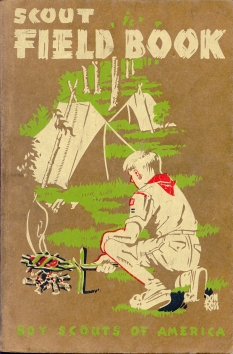
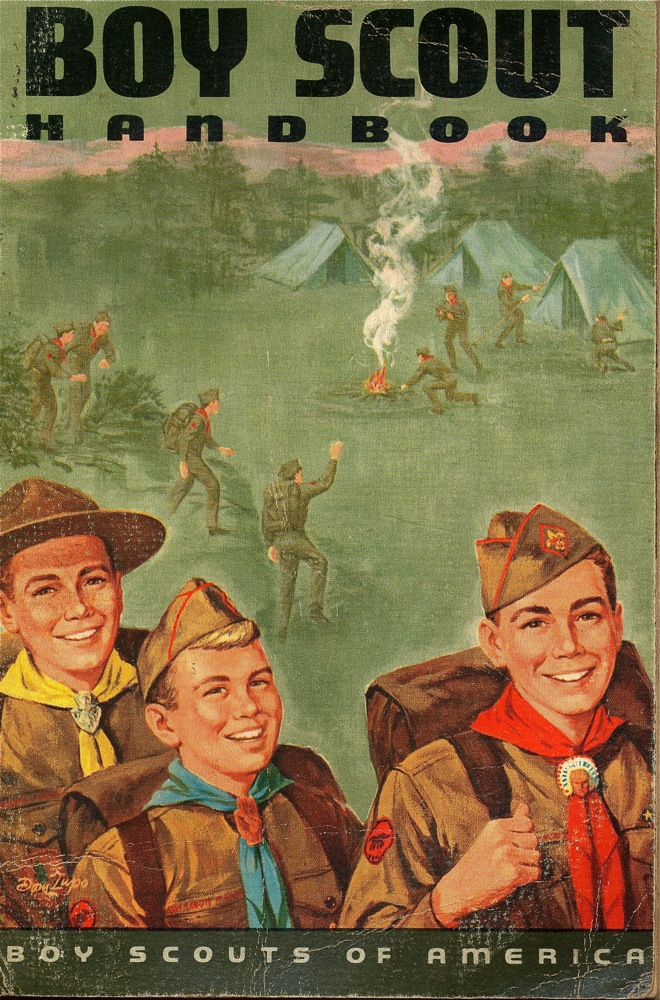
Any Boy Scout Handbook, PRIOR to the 1972 printing, & Boy Scout Fieldbook prior to 1979.
They are written so that a 12 year old boy can understand them, and they come with clear, concise, directions and illustrations, they’re field-use durable, AND… they can still be had for a quarter at yard sales across the country.
When the baby boomer enrollment was peaking in the Scouting movement (1957 - 1971), almost 100,000,000 handbooks were printed during that time. Used ones in service-grade condition are still quite easy to find.
A good handbook and fieldbook will make for good reading for the WHOLE family/group in your surivival circle, and will ESPECIALLY appeal to the young 'uns. Getting your Scouting-age boys in the program NOW, is a good way to PRACTICE & HONE these skills today, too.
The Foxfire books have good stuff in them. I think that I have the first four books on .pdf files. If anyone wants them, just send me an e-mail to ewholmes at gmail dot com and I will send them to you.
Took your advice on the scout field book however I have a few questions.
The first edition appears to have finished its printing in 1959 – the second edition printed from 67-83. Between the two editions the chapter titles appear to have changed and a few removed/added to the mix. What other changes appeared between the two editions, and what changed in 1979. Or, did you mean 1959, and you were instead suggesting we stick with the first edition only?
I’ve heard that the scouting books have become much more politically correct as time has gone on. Specifically, skills related to building wood furniture and the like have been replaced with more “leave no trace” info.
You mentioned that the pages were very durable and that this was a “field use” book. Picking a copy up online and am looking forward to enjoying the material.
Why the publication date recommendation? Oh and assistant cub & scout master here and I agree 100%, get your boys into scouting.
They have gotten a bit more PC in some areas. In other areas the changes were good. The “leave no trace” concept is good, but they have taken it to near eco insane levels.
100% in agreement. I am very impressed with the information and time that went into compiling it all.
This book is a good reality check for those who think having a go-bag full of survival gear alone will save them.
Get it from Amazon, it’s one of the best $11 I have spent in a long time.
I just finished Cody Lundin’s 98.6 Degrees The Art of Keeping Your ASS ALIVE. I thought it was a great book. He breaks down short-term survival very simply. I wish I could have read this book ten years ago.
I’m just finished “Build the Perfect Survival Kit” by John McCann. I have to say, I’m overall not impressed but I don’t think he necessarily wrote the book for people with a good base of survival knowledge, but more for the novice. He basically explains and showcases many of the good and not so good pieces of survival gear available today (most of it which he sells on his website).
I actually bought the book out of curiosity and I think it’s great for the the person who wants to put together their first survival kit(s). On nice thing about it is that the book reiterates the main necessities of survival and equipment needed to accomplish the goal. The only thing that really changes is the amount and size of tools you can carry to get the job done.
I really like his website though, he sells great survival gear/supplies for very good prices.
Let me reccomend the “When Hell Breaks Loose” book by Cody Lundin.
For those of you who are in the Southwest, his school is in AZ.
I would go there if I was in the same country…
Sure there are good instructors here, but the mindset about preparedness isn’t there yet, despite the recent catastrophes…
I first read about his books in Doug Ritter’s site http://www.equipped.org/books.htm. He has plenty reccomendations, along with commentaries. “Patriots” is there too.
One thing I read somewhere, regarding long term survival, is cultivating good relations with your neighbours. The manpower of a community is nothing to be overlloked, also, there might be some valuable skillset along those people that should be spread among other heads (and hands)
All of these are great books, while nothing quite compares to SERE school and first hand experience in the field, common sense is always the best guiding stone.
Having taken many of his courses, I would highly recommend Tom Brown Jr’s book “Tom Brown’s Field Guide to Wilderness Survival”
It’s very informative, well laid out and you will walk away with a wealth of knowledge.
But like others have said, reading about it doesn’t mean you can do it. With any of these books, you should develop your own curriculum that can help guide your training program.
Books are essentially tools and thus can be used correctly or incorrectly. I would say that applies to all the books that have been mentioned…if you get my meaning.
Anyone who has actually ever come through an actual survival situation shares one common trait with every other person who has done so. The will to survive. They may have done several things wrong or not made the best choices along the way, but they did have the will to survive and the mental toughness to persevere.
A person can have the “end all - be all” survival book in their bag or back pocket or whatever…if that person does not have the will to do what it takes and not give up…he will die.
That said, the U.S. Army Survival manual is an exellent reference guide. I would also recommend the Foxfire series which covers more information than I can recall at the moment. A few subjects that come to mind are soapmaking, tanning hides, preserving foods, distilling alcohol and natural medicines and remedies.
ran by BAM a little while ago…picked up Survive (Les Stroud) for 15.99 minus 10% for some card my wife has…so I think a great deal at around $14…Almsot grabbed Cody’s 98 Degrees instead…really like the way it was written. It looked like it could keep me interested as I am not much of a reader. I wish I were but I’m just not. I am going to try and read Strouds and I may run back and get 98 Degrees because in all honesty the best survival book is one that you will read, and that one may get me started.
I have the SAS survival guide- actually 3, one in my BOB, a small palm sized one in my truck, and another in my library. I also have Les Strouds Survive in my library.
 I also agree that Deep Survival is also a very good book.